
Each November the Whittlesea Photography Club runs the photography competition as part of the Whittlesea Show.
An invitation to enter is open to photographers of all levels from Novice to Masters. In addition, there are also specific categories for Primary and Secondary students.
Entries generally close three (3) weeks before the show, so please check the Whittlesea Show website (www.whittleseashow.org.au) for the full schedule of categories and closing dates. Programs will be available from early September.
IMAGE PRESENTATION REQUIREMENTS
RULES AND REGULATIONS
Please Read Carefully
- All submitted entries must have originated as a photograph (i.e. a digital camera, smart phone or film camera)
- All photos must be the genuine work of the entrant, including any post processing (e.g. Photoshop manipulation or adjustments)
- Photos exhibited in previous years will not be eligible for judging
- A judging panel of three (3) judges will consider all photos as they are displayed. Judges may withhold awards when the photos, in the opinion, do not conform with the class in which they are entered
- At the discretion of the competition Superintendent, Stewards or Judges, photos that are considered to be offensive will be removed from the competition, and titles that are considered to be offensive, changed.
- Unless otherwise stated permission to reproduce photos in a catalogue or for publicity purposes is assumed
- Novice classes are for entrants who have not won a 1st prize in any photography class any Agricultural Show previously
- Masters Class is restricted to financial members of any VAPS affiliated Photography Club (vaps.org.au). VAPS affiliated members may enter any other classes for which they are eligible.
- Monochrome is defined as a Black and White image or one that is toned in entirely a single colour. A black and white print modified by a partial toning or by the addition of one colour becomes a colour work
- All care will be taken with the entries, but no responsibility will be accepted for loss or damages during transit or exhibition
- Image sizes including print and mount: Minimum 20cm x 25cm and Maximum: 40cm x 50cm
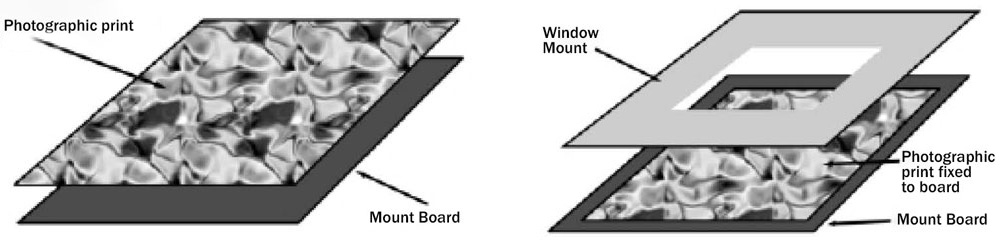
- All prints must be mounted on mounting board only. Prints mounted on coloured paper less than 2mm thick will not be accepted. Maximum total thickness is 5mm
- Framed prints will not be accepted
- Limit of 4 entries per person per class. Masters Class limited to 2 entries
- Back of photos must bear in the top left corner:
- Title of the Image
- Class Entered
- Photographers name
- Photographers address
- Entries for Masters Class must also include their VAPS affiliated club name
- No image may be entered in two different classes
- Photos may be collected at the close of the show at 5pm on Sunday. Alternatively a self-stamped self-addressed envelope can be provided with the entry for return of photos via post.
- Photos not collected will be returned to the Ag Society offices and if not collected within 7 days after the Show will be disposed of.
NATURE SECTION
Nature Photography Definition (updated 1st January 2015)
Nature photography is restricted to the use of the photographic process to depict all branches of natural history, except anthropology and archaeology, in such a fashion that a well-informed person will be able to identify the subject material and certify its honest presentation. The story telling value of a photograph must be weighed more than the pictorial quality while maintaining high technical quality. Human elements shall not be present, except where those human elements are integral parts of the nature story such as nature subjects, like barn owls or storks, adapted to an environment modified by humans, or where those human elements are in situations depicting natural forces, like hurricanes or tidal waves. Scientific bands, scientific tags or radio collars on wild animals are permissible. Photographs of human created hybrid plants, cultivated plants, feral animals, domestic animals, or mounted specimens are ineligible, as is any form of manipulation that alters the truth of the photographic statement.
No techniques that add, relocate, replace, or remove pictorial elements except by cropping are permitted. Techniques that enhance the presentation of the photograph without changing the nature story or the pictorial content, or without altering the content of the original scene, are permitted including HDR, focus stacking and dodging/burning. Techniques that remove elements added by the camera, such as dust spots, digital noise, and film scratches, are allowed. Stitched images are not permitted. All allowed adjustments must appear natural. Color images can be converted to grey-scale monochrome. Infrared images, either direct-captures or derivations, are not allowed. Images used in Nature Photography competitions may be divided in two classes: Nature and Wildlife. Images entered in Nature sections meeting the Nature Photography Definition above can have landscapes, geologic formations, weather phenomena, and extant organisms as the primary subject matter. This includes images taken with the subjects in controlled conditions, such as zoos, game farms, botanical gardens, aquariums and any enclosure where the subjects are totally dependent on man for food.
Images entered in Wildlife sections meeting the Nature Photography Definition above are further defined as one or more extant zoological or botanical organisms free and unrestrained in a natural or adopted habitat. Landscapes, geologic formations, photographs of zoo or game farm animals, or of any extant zoological or botanical species taken under controlled conditions are not eligible in Wildlife sections. Wildlife is not limited to animals, birds and insects. Marine subjects and botanical subjects (including fungi and algae) taken in the wild are suitable wildlife subjects, as are carcasses of extant species.
Wildlife images may be entered in Nature sections of Exhibitions.